
Stealing art works…
An essay…

© Alma Hoffmann, 2026.
I am fascinated by stories of stolen artworks. It all started with a book I found at the then Borders store in the Chicago Metra Station. It was inside a large sale bin. The book was titled Provenance by Laney Salisbury and Aly Sujo. It enthralled me. A few years after, B. Shapiro published her book The Art Forger. I became obsessed with it. Recently two books have occupied my mind: The Art Thief by Michael Finkel—which I read practically in a day, and Artifacts, which is Natalie Lemle’s debut novel.
The efforts and planning that go into art theft are colossal. Yet, depending on the time of day, the efforts and planning can be incredibly simple. This is the case of Stéphane Breitwieser as told in the book The Art Thief. Most of the works he stole happened in the middle of the day, with people visiting the museum, and perhaps the most remarkable aspect, it was all performed with a Swiss Army knife. For him, “stealing artwork should be a daytime affair of refined stealth…” as Finkel explains. By the time he was caught his collection was valued at two billion dollars.
Even after Breitwieser was caught and released, he could not help himself and relapsed several times. Most art thieves fence their pieces. According to Finkel, “The Association for Research into Crimes Against Art, reports that art and antiquities theft is among the world’s highest-grossing criminal trades.” He adds, that the majority of these thefts are “from private homes… with at total value of several billion dollars.”
For Breitwieser, money was not the motivation. Finkel quotes him saying “art is my drug.” His criteria for stealing an art piece was emotional, visceral even, and personal. I guess one can say that he needed to feel seduced by the artwork. A seduction so powerful and compelling that his entire being responded to what he felt was an irresistible call. He never sold his pieces. Finkel explains that for Breitwieser, “stealing art for money is disgraceful but liberating [art] for love… feels ecstatic.” The stolen pieces were kept in his bedroom and the attic under lock to be contemplated and admired by him and his girlfriend. Finkel wittily states “secrets need space.”
Some have described Breitwieser as a kleptomaniac. Others have described him as narcissistic. And others, according to Finkel, have considered him to suffer from Stendhal syndrome. It turns out that though it is not an officially recognized condition registered in the Diagnostic and Statistical Manual of Mental Disorders, Breitwieser felt seen when he learned of this condition, as Finkel explains. According to the Mind Help Community, the Stendhal syndrome (SS) “is a rare psychiatric condition caused by exposure to artistic or historical artifacts or after witnessing too many artworks at the same time. It is marked by a state of dizziness, anxiety, or panic.”
The first person to have ever experienced the syndrome was the French writer Marie-Henri Beyle, who used the pseudonym of Stendhal. He described to have experienced a series of intense emotions akin to an ecstasy while visiting the Basilica of Santa Croce where Machiavelli, Michaelangelo, and Galileo are buried. The term was coined by Italian psychiatrist Graziella Magherini in 1989 after observing hundreds of tourists experiencing these episodes. Since then there have been other cases. The most recent was in 2018 when a tourist had a heart attack while admiring The Birth of Venus by Botticelli.
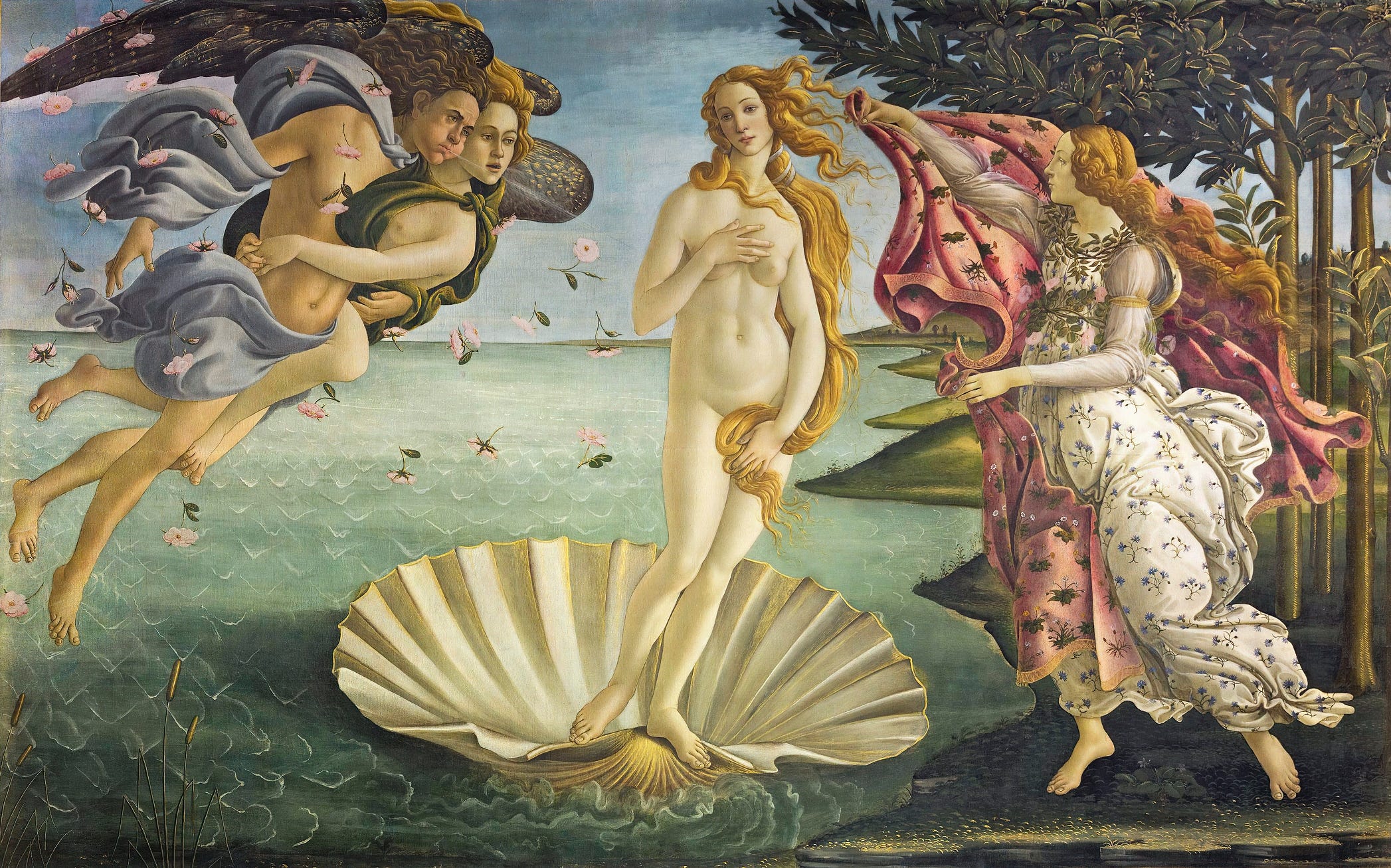
Sandro Botticelli, circa 1485.
Yet, though the syndrome might explain feeling intensely seduced by the artworks, it does not explain the act of stealing them. Those who have experienced the Stendhal syndrome suffer some type of physical affliction while in the presence of an artwork or artworks. With Breitwieser, there is more. He is skilled at almost planning the theft in the moment. Or is it that the syndrome in his case entails the obsessive and compulsive reaction of perpetrating a crime?
There have been times when I have felt a physical reaction to an artwork. In 2002, I visited the Tate where they were showing one of Monet’s paintings from The Water Lilies series. When I saw it, I almost cried. I was overtaken by emotion. Some art pieces simply take over the senses and it is almost like being raptured. Another time, I saw an abstract piece (don’t remember the title or the artist) with the colors blue and cream. The way the colors merged and their saturation transported me to the ocean. I grew up by the ocean and the painting took me back. I remember feeling the water spraying my face and the smell of the ocean engulfed me. Visiting a museum or gallery is for me a transformative experience. Yet, my experiences fall short, very short of planning an art heist.
Though I have never experienced the Stendhal syndrome, I believe that art is a powerful expression that deeply moves a person, a group, a society, and a country. It is after all the artistic expressions that are censored when created to protest or to dissent, for example. Museums keep a visual record of our collective history. Finkel quotes Alexandre Von der Mühll, an art crime police inspector in Switzerland saying “museums are secular churches… and to steal there is blasphemous.”
Until next week.
Love,
Alma
Love the last line Alma. Thanks for sharing, Art indeed is a powerful engine for change, joy...so many of the memorable moments as a kid I have and still continue to have in art museums. A precious artwork is worth thousands of words. ✨️