
Looting artifacts…
A review…

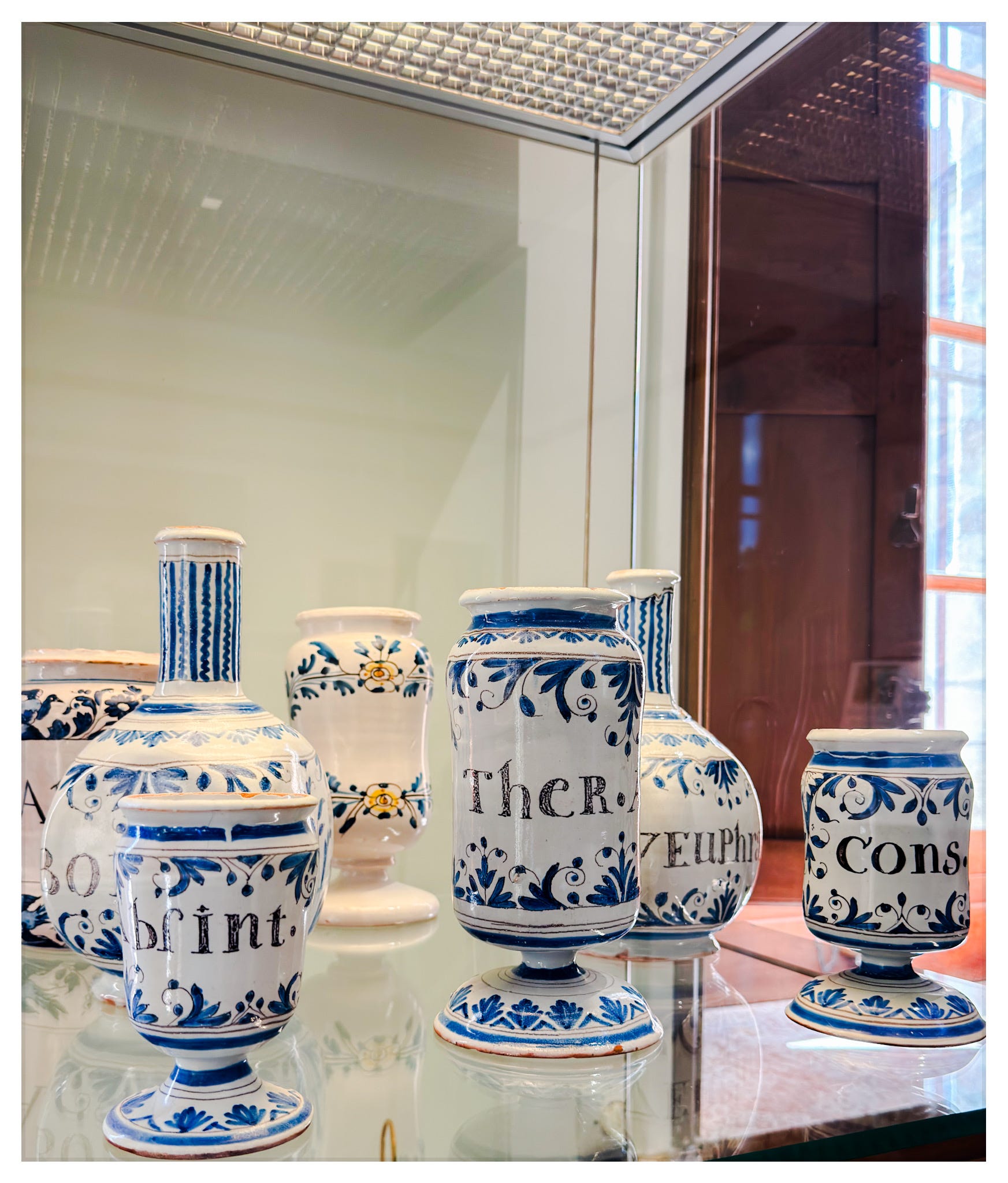
Hôtel-Dieu Museum – Hospices de Beaune.
Last week I mentioned I was reading the book Artifacts by Natalie Lemle. I finished it shortly after. The novel is Ms. Lemle’s debut novel. On the publisher’s bio page, it states that she has studied classics and art history as well as having an MFA in creative writing. And her background comes through in this novel.
This book is fascinating. The story is layered by a series of stories weaving in and out of the narrative. The narrative revolves around the main character Lena, who is a lawyer, her background in archeology and experiences digging sites in Italy, the people she met back then who are relevant in the present, and the Italian ‘Ndrangheta and its influence on art and politics, and museums’ donations. There is much more I could add here but I don’t want to give away too much.
Though the novel is Ms. Lemle’s first, it is remarkably detailed. It is a definitely ambitious story in terms of how much ground it covers in art history, archeology, Italian culture and politics, and Lena’s personal struggles as a young lawyer who at times seems a little too much preoccupied with how she is perceived. The background research Ms. Lemle has done to support the story is simply outstanding. Often I found myself reviewing read pages to make sure I was keeping track of some of the historical aspects that held the narrative and the threads.
I enjoyed the book and once I got into it, I could not stop reading. And once I finished I felt sad because it was over. My thirst for knowing what was going to happen next kept me on my toes.
When I read books, whether they are fiction or not, I can’t help but highlight segments of things that call my attention, great sentences I want to remember, or simply some good quotes to keep in mind for later. I thought I would share my favorite quotes from the book below.
“Nothing makes me more productive than the threat of exercising.”
“…your twenties are not for socializing—they are for building your career.”
“…cultural heritage is, in a way, a myth: a story conceived in retrospect to explain what to do with the things we have inherited.”
“Provenance is a judgement call.”
“Even looters in Italy care about the art…”
“The looters are basically victims of colonialism. They have their power taken away from them, so they lose their connection to their own cultural heritage.”
“Who is more guilty—the person who doesn’t protect you? Or the person who actually hurts you?”
“Informed speculation, the label said, can illuminate many possibilities.”
“…the genuine feeling of betrayal at having a mother who didn’t know how to mother.”
“Present conditions don’t cancel out a history of wrongdoing.”
“Nostalgia for the possibilities that were no longer.”
“But money isn’t the vehicle for wrongdoing. Money is the fuel. Without fuel, the car stops running.”
“The person who provides the fuel to keep an engine running is complicit in what the engine does.”
“Even moments of beauty could induce pain.”
“Museums are literal power structures.”
“…if you accept authority, you have to eventually outgrow it…”
“…the internal, the intangible, can persist. The soul of a thing can stay the same. This is why ancient objects have value.”
“…the soul of them persists. We sense this, as humans, even if we can’t see it with our eyes.”
“The immutable concealed by the mutable.”
“Nothing escapes fate…”
“…understanding is not the same as knowing.”
If you read the book, please let me know. I would love to exchange impressions.
Until next week.
Love,
Alma
Thanks for sharing your thoughts on the book Alma❤️❤️! I will share what I think once I read it, already added to my to be read. The quotes are truly deep, history, culture are indeed intertwined with political systems that impact art in many ways. It is always refreshing to read your essays. I wish you a great fin de la semana:)